
Does Smoking Affect Sperm Quality?
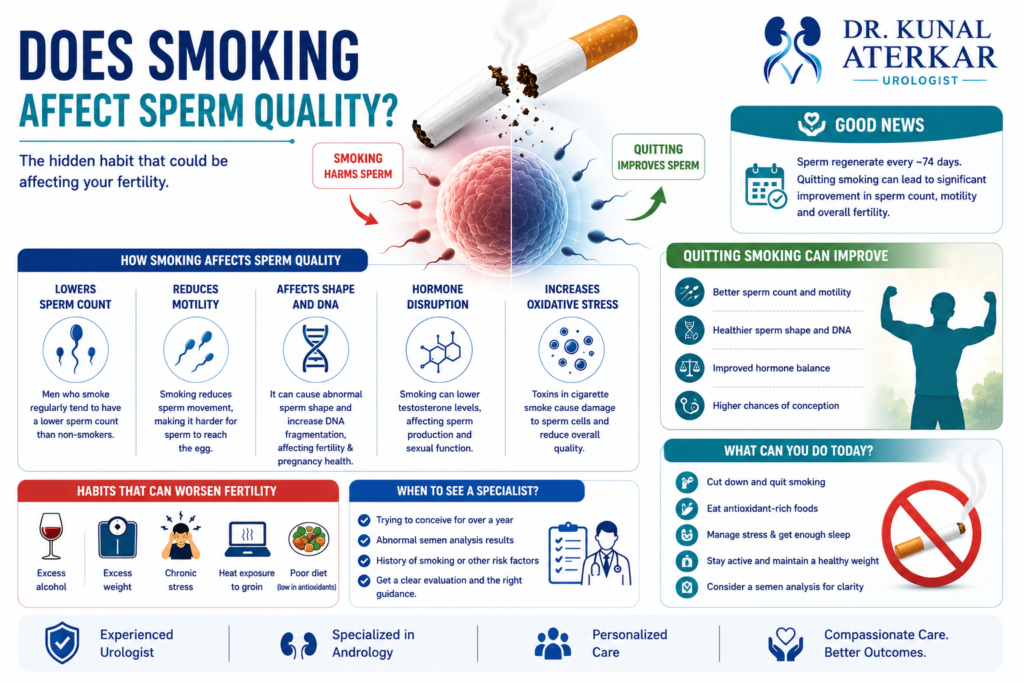
Does Smoking Affect Sperm Quality? Introduction If you and your partner have been trying to conceive for a while, you’ve probably searched for every possible reason things aren’t moving forward. Smoking rarely comes up in casual conversation, but it’s one of the most overlooked factors affecting male fertility. If this thought has crossed your mind quietly, you’re far from the only one asking it. The good news is that this is one factor you have real control over, and understanding how it works is the first step toward changing it. How Does Smoking Affect the Reproductive System? Chemicals from cigarette smoke enter your bloodstream and reach almost every organ, including the testes. These toxins increase something called oxidative stress, basically extra wear and tear on healthy cells. Smoking also narrows blood vessels slightly, reducing blood flow to reproductive organs over time. The reproductive system is sensitive to these changes, even when nothing feels different day to day. Does Smoking Lower Sperm Count? Yes, and this connection has been shown across multiple studies over the years. Men who smoke regularly tend to have a noticeably lower sperm count than non-smokers, with the effect generally stronger in heavier, long-term smokers. This doesn’t mean pregnancy becomes impossible, but it often means conception takes longer. What makes this tricky is that sperm count isn’t something a man can feel or sense on his own. It only becomes clear through a proper semen analysis, which is why many men are genuinely surprised by their first results. Does Smoking Affect Sperm Motility? Motility simply means how well sperm can swim toward the egg. Smoking has been shown to reduce motility, making the journey harder for sperm to complete. Even sperm that are present in normal numbers may struggle to move efficiently. This is one of those hidden factors that only shows up through a proper semen analysis. Can smoking damage sperm shape or DNA? Smoking can affect sperm shape, called morphology, which influences how well sperm function. It’s also linked to higher DNA fragmentation, meaning small breaks in the genetic material sperm carry. This matters because healthy DNA plays a role in both conception and pregnancy health. These changes usually aren’t something a man would ever notice without specific testing. Does Smoking Affect Fertility-Related Hormones? Smoking has also been linked to disruptions in testosterone, the hormone that plays a central role in sperm production. When hormone levels shift out of balance, it can affect both sperm quality and sexual function. These changes tend to build up slowly over months and years, which is part of why the link between smoking and fertility often goes unrecognized for so long. How Long Does It Take for Smoking to Affect Fertility? Sperm regenerate roughly every 74 days, so ongoing smoking means ongoing exposure to damage. The longer someone smokes, the more cumulative the effect tends to be. Even relatively short-term smoking can show measurable effects on semen quality. Can Quitting Smoking Improve Sperm Quality? This is genuinely the most encouraging part of the picture. Because sperm renew themselves on a regular cycle, the body has a real opportunity to recover once smoking stops. Many men notice measurable improvement in both sperm count and motility within roughly three months of quitting, which lines up with how long a fresh batch of sperm takes to fully develop. Of all the factors influencing fertility, this is one of the most within a person’s control. What Other Habits Often Combine With Smoking to Worsen Fertility? Smoking rarely operates in isolation. A few other everyday habits tend to compound its effects on fertility: Regular alcohol use, which adds further oxidative stress on sperm Carrying significant excess weight, which can throw hormone balance off further Prolonged, high stress levels over long stretches of time Frequent heat exposure to the groin area, whether from resting a laptop on the lap or wearing very tight underwear A diet low in antioxidants, the kind found in fruits, vegetables, and nuts Recognizing these overlapping habits helps explain why fertility struggles sometimes feel like more than just one issue. When Should You Consider Seeing a Specialist? It’s worth seeking a proper evaluation rather than continuing to guess if You and your partner have been trying to conceive for over a year without success A semen analysis has already shown lower count, reduced motility, or abnormal shape Smoking history, past infections, or other risk factors are part of your background Male infertility treatment typically begins with a straightforward semen analysis, giving both partners a clear, honest picture of what’s happening before deciding on the right next steps together. What Practical Steps Can You Take Today? Change doesn’t have to happen all at once. A few simple, realistic steps can make a real difference: Start by cutting down, even before quitting entirely; every reduction genuinely helps and builds momentum Add antioxidant-rich foods like berries, nuts, and leafy greens to support the body’s natural repair process Limit alcohol and manage stress through activity, better sleep, or relaxation techniques Avoid prolonged heat exposure to the groin area Consider a semen analysis to get a clear starting point rather than guesswork Final Thoughts Smoking’s effect on fertility is real, but it’s also one of the more reversible factors involved in the fertility conversation. If you’ve been quietly wondering whether this habit is part of your own journey toward starting or growing a family, that awareness alone is already a meaningful first step forward. For personalized guidance and male infertility treatment in Ahmedabad, Dr. Kunal Aterkar, an experienced urologist in Ahmedabad, can help you understand your specific situation clearly and build a realistic, supportive path forward from here.