
Author name: Dr Kunal Aterkar

Could Blood in Semen Be a Sign of Prostate Cancer?
Uncategorized

Could Blood in Semen Be a Sign of Prostate Cancer?

Could Blood in Semen Be a Sign of Prostate Cancer? Introduction Noticing blood where you don’t expect it is unsettling no matter where it shows up, and semen is no exception. It’s completely natural for your mind to jump straight to worst-case thinking. Take a breath, because in the vast majority of cases, the explanation is far less alarming than it feels in that first moment. What Does Blood in Semen Actually Look Like? It can appear pink, bright red, or even brownish in color. Sometimes it happens just once and never again. Other times, it shows up occasionally over a short period before resolving. The amount can range from a faint tinge to something more noticeable. Is Blood in Semen Usually Something Serious? In most cases, especially in younger men, it’s a benign, temporary occurrence. A single episode often resolves entirely on its own without any treatment needed. Serious causes exist, but they represent a small percentage of overall cases. What Are the Most Common Causes? Minor trauma or particularly vigorous sexual activity can cause small blood vessels to break. A recent prostate biopsy or medical procedure is a very common, expected cause afterward. A prolonged period without ejaculation, followed by activity, can occasionally cause this too. Small, fragile blood vessels around the prostate can sometimes bleed without any underlying disease. Can Infections Cause This Too? Prostatitis, an infection or inflammation of the prostate gland, is a well-known cause. Infection of the seminal vesicles, small glands involved in semen production, can also be responsible. These causes are often accompanied by discomfort, pain during ejaculation, or occasionally a mild fever. Does Age Change How Concerning This Symptom Is? In men under 40, this is very rarely connected to cancer and often resolves without any treatment at all. In men over 50, especially with episodes that keep recurring, a more thorough evaluation becomes worthwhile. Age alone isn’t a reason to panic, but it does shift how proactively it’s worth investigating. When Might This Actually Be Linked to Prostate Cancer? Being honest, this connection is uncommon, but it’s not impossible, particularly in older men. It becomes more relevant when the bleeding is recurring rather than a one-time event. Additional symptoms, like changes in urination, pelvic discomfort, or unexplained weight loss, would typically accompany it. A family history of prostate cancer or an elevated PSA level would also factor into this consideration. What Other Symptoms Should Prompt a Doctor’s Visit Sooner? Blood appearing more than once or twice. Blood in the urine alongside blood in semen. Pain during ejaculation or urination. Unexplained weight loss or ongoing fatigue. Difficulty urinating or a noticeably weaker stream. How Is the Cause Actually Diagnosed? A PSA blood test helps assess prostate health as part of the evaluation. A physical exam allows your doctor to check for any noticeable abnormalities. A urine test can rule out infection as the underlying cause. Imaging, like an ultrasound, may be used if further clarity is needed. What Happens If Something More Serious Is Found? Early detection generally leads to significantly better outcomes and more treatment options. Depending on the stage and specifics, various approaches to prostate cancer treatment in Ahmedabad are available, ranging from active monitoring to more definitive treatment. Finding something early rarely means facing it without options, quite the opposite, actually. What Should You Do If You Notice This Symptom? Don’t panic after a single occurrence, since this is usually benign and temporary. Keep a simple note of whether it happens again or seems to be a one-time event. Mention it to your doctor at your next visit, or sooner if other symptoms appear alongside it. Trust that getting it checked brings clarity, not necessarily bad news. Final Thoughts Blood in semen understandably causes alarm, but in the overwhelming majority of cases, it’s a temporary, benign issue rather than a sign of prostate cancer. Persistent or accompanied symptoms simply deserve a proper look rather than assumptions either way. For thorough evaluation and, if ever needed, expert prostate cancer treatment in Ahmedabad, Dr. Kunal Aterkar can help you understand exactly what’s behind your specific symptoms.

Does a Penile Implant Affect Fertility?
Penile Prosthesis

Does a Penile Implant Affect Fertility?

Does a Penile Implant Affect Fertility? Introduction If you’re considering penile prosthesis surgery  and still hope to have children someday, this question matters deeply, and it’s a completely fair one to ask before moving forward. The good news is that the answer brings genuine reassurance once you understand how the body’s different systems actually work. What Does Fertility Actually Depend On? Fertility relies on two separate things: healthy sperm production in the testicles and successful delivery of that sperm during ejaculation. These processes are controlled by a completely different part of the body than the one involved in achieving an erection. Understanding this separation is the key to answering the fertility question clearly. Where Is a Penile Implant Actually Placed? The device is placed within the erectile chambers of the penis, the tissue responsible for rigidity during an erection. It doesn’t touch the testicles, the tubes carrying sperm, or the nerves involved in sperm production. Because of this specific placement, the implant works independently from the reproductive system entirely. Does the Implant Affect Sperm Production? No, sperm production continues normally in the testicles, completely unaffected by the implant. The two systems simply don’t overlap anatomically, so one doesn’t interfere with the other. This is one of the most reassuring facts for men worried about this connection. Does the Implant Affect Ejaculation? Generally, no. Most men retain the ability to ejaculate normally once healing is complete. The pathways involved in ejaculation remain separate from where the implant sits. Sensation and the ability to reach orgasm are also typically preserved after surgery. Can You Still Father Children After Getting a Penile Implant? Yes, many men go on to father children after this procedure without any issue related to the implant itself. The device only addresses the mechanical ability to achieve firmness for penetration. Everything involved in actual conception remains functionally unchanged by the surgery. Are There Situations Where Fertility Could Still Be a Concern? If the original cause of erectile dysfunction, like diabetes, prior surgery, or a hormonal imbalance, also affects fertility, that connection exists separately from the implant. Age-related changes in sperm quality are a separate factor entirely, unrelated to this procedure. Being honest about these distinctions helps you understand your specific situation rather than assuming the implant itself is the limiting factor. Should You Discuss Family Planning Before Getting an Implant? Yes, if having children in the future is part of your plans, it’s worth raising this directly with your doctor beforehand. Sperm banking can be considered as an additional precaution if there’s any uncertainty about your fertility for other reasons. This isn’t because the implant itself poses a risk, but because open conversations lead to better peace of mind. Does the Type of Implant Make a Difference to Fertility? No, there’s no meaningful difference between inflatable and malleable implants when it comes to fertility. Both types are placed within the same erectile chambers, well away from any reproductive structures. Your choice between the two comes down to lifestyle and preference, not fertility concerns. What Should You Ask Your Surgeon Before Moving Forward? Whether any underlying condition you have might separately affect your fertility. Whether sperm banking makes sense for your specific situation and timeline. What your realistic expectations should be for sensation, ejaculation, and overall function afterward. Asking these questions directly helps you move forward with genuine clarity rather than lingering doubt. Final Thoughts A penile implant addresses the ability to achieve a firm erection, nothing more, and it doesn’t interfere with the separate systems responsible for sperm production or fertility. If starting or growing a family is part of your future plans, an honest conversation beforehand brings real peace of mind. Dr. Kunal Aterkar, offering trusted penile prosthesis surgery in Ahmedabad, can walk you through exactly what applies to your specific situation.

What Is a Penile Prosthesis and How Does It Work?
Penile Prosthesis

What Is a Penile Prosthesis and How Does It Work?

What Is a Penile Prosthesis and How Does It Work? Introduction Talking about erectile dysfunction is hard enough, let alone researching surgical options for it. If you’ve tried other treatments without success and are now reading about penile prosthesis surgery in Ahmedabad, know that this is a well-established, medically respected option, not a last resort to feel uneasy about. Here’s a clear, judgment-free explanation of what it actually involves. What Exactly Is a Penile Prosthesis? It’s a medical device surgically placed inside the penis to help achieve an erection reliably. It’s typically considered when other treatments, like medication, injections, or vacuum devices, haven’t worked well. This procedure has been performed safely for decades and is a recognized, established solution worldwide. For many men, it becomes the option that finally restores confidence after a long, frustrating search for answers. Who Is This Treatment Typically Recommended For? Men whose erectile dysfunction hasn’t responded to pills, injections, or other non-surgical treatments. Those with underlying conditions like diabetes, prior prostate surgery, or Peyronie’s disease affecting penile shape. Men who’ve experienced ED following spinal cord injury or certain nerve-related conditions. Anyone seeking a dependable, long-term solution rather than one requiring timing or planning around use. What Are the Different Types of Penile Implants? Inflatable implants, the most commonly chosen option, allow a natural-feeling flaccid state and a firm erection on demand. Malleable, or semi-rigid, implants are simpler devices that stay firm but can be positioned as needed. Each type has its own advantages, and your surgeon will help determine which suits your anatomy and lifestyle best. How Does the Inflatable Type Actually Work? A small pump is placed within the scrotum, alongside a fluid reservoir inside the body. Squeezing the pump moves fluid into cylinders placed within the penis, creating an erection. A release valve allows the fluid to flow back, returning to a natural, flaccid state afterward. Once you’re familiar with it, the process becomes quick and straightforward. What Happens During the Surgery Itself? The procedure is performed under anesthesia, so you won’t feel anything during surgery. A small incision is used to place the device, without significant external scarring. Most procedures take around one to two hours, often with a short hospital stay or same-day discharge. What Should You Expect During Recovery? Mild swelling and discomfort in the first few days is normal and expected. Light activity restrictions apply for a few weeks while healing progresses. The device typically isn’t used until full healing is complete, usually around four to six weeks. Follow-up visits help confirm everything is healing properly before use begins. Does the Device Affect Sensation or Become Noticeable? No, natural sensation and the ability to reach orgasm are generally unaffected, since the device only supports the erection mechanism itself. Once healed, the implant isn’t noticeable to others in daily life or clothing. Many men are relieved to learn how naturally it integrates into everyday life afterward. What Are the Benefits of Choosing This Option? High satisfaction rates have been reported among both patients and partners in long-term studies. Unlike medication, there’s no need to plan or wait for treatment to take effect. It offers a reliable, long-term solution once healing is complete. For many men, it genuinely restores confidence that other treatments hadn’t provided. Are There Any Risks to Be Aware Of? As with any surgery, there’s a small risk of infection or complications. Mechanical components can occasionally require repair or replacement over many years of use. Choosing an experienced surgical team significantly reduces these risks and supports a smoother outcome. How Long Does the Device Typically Last? Many devices function reliably for ten to fifteen years or longer. If a mechanical issue does arise later, the device can usually be repaired or replaced. Isn’t a sign of giving up Deciding to look into penile prosthesis surgery in Ahmedabad often comes after a long, tiring search for something that actually works, and reaching this point says nothing negative about you. With the right surgical team, it tends to be the option that finally brings dependable, lasting results. Dr. Kunal Aterkar offers a private, understanding space to talk through your situation and figure out the right path forward together.

Urology

Can Diabetes Cause Erectile Dysfunction?

Can Diabetes Cause Erectile Dysfunction? Introduction Talking about erectile dysfunction isn’t easy for most men, and adding diabetes into the picture can make the worry feel even bigger. If you’ve noticed changes and you’re managing diabetes too, you’re not imagining things, and you’re not alone. The two conditions are closely linked, and understanding why takes away much of the fear. Many men here look into erectile dysfunction treatment once they understand what’s really happening, and the reassuring part is that this condition is very manageable. Is There Really a Link Between Diabetes and Erectile Dysfunction? Yes, and it’s one of the most well-established connections in men’s health. Diabetes affects blood flow and nerve signals, both of which play a direct role in achieving and maintaining an erection. This doesn’t mean every diabetic man will experience it, but the risk is meaningfully higher. How Does Diabetes Affect Erectile Function? Does High Blood Sugar Damage Blood Vessels? Over time, high blood sugar can harden and narrow blood vessels, a process called atherosclerosis. Since an erection depends on healthy blood flow, narrowed vessels make it harder to achieve or sustain one. Can Diabetes Affect Nerve Signals? An erection starts with a nerve signal traveling from the brain to the penis. Diabetes can damage these nerves over time, a condition called neuropathy, which disrupts that signal. Does It Affect Hormone Levels Too? Diabetes is also linked to lower testosterone in some men, which can reduce sexual desire and add to the difficulty. What Are the Warning Signs to Watch For? Difficulty getting or keeping an erection Reduced interest in sexual activity Erections that feel noticeably softer than before Growing anxiety around intimacy These signs often appear gradually, which is why many men brush them off until they become harder to ignore. Who Is More at Risk? Diabetes that has been poorly controlled for years Smoking, which further narrows blood vessels High blood pressure or high cholesterol Being overweight or largely inactive Stress, anxiety, or depression alongside diabetes Having one or more of these doesn’t guarantee erectile dysfunction, but it makes early monitoring worthwhile. What Does Erectile Dysfunction Treatment in Ahmedabad Involve? Treatment usually starts with getting blood sugar under better control, since this alone improves symptoms for many men. Beyond that, options include: Oral medications that improve blood flow Lifestyle changes like quitting smoking and regular exercise Managing blood pressure and cholesterol alongside diabetes Counselling, if stress or anxiety is playing a role In select cases, further medical evaluation or intervention Can Erectile Dysfunction Be Prevented in Diabetic Patients? Keep blood sugar within your target range consistently Stay physically active most days of the week Avoid smoking and limit alcohol Get regular check-ups for blood pressure and cholesterol Talk to your doctor early rather than waiting it out Final Thoughts Erectile dysfunction linked to diabetes is common, medical, and treatable, not a reflection of anything being wrong with you as a person. Understanding the connection is often the first step toward feeling in control again. If this has been weighing on you quietly, reaching out to a urologist in Ahmedabad with a specialist like Dr. Kunal Aterkar can bring clear answers, handled with the privacy and care it deserves.

Urology

Why Is My Urine Flow Weak? 

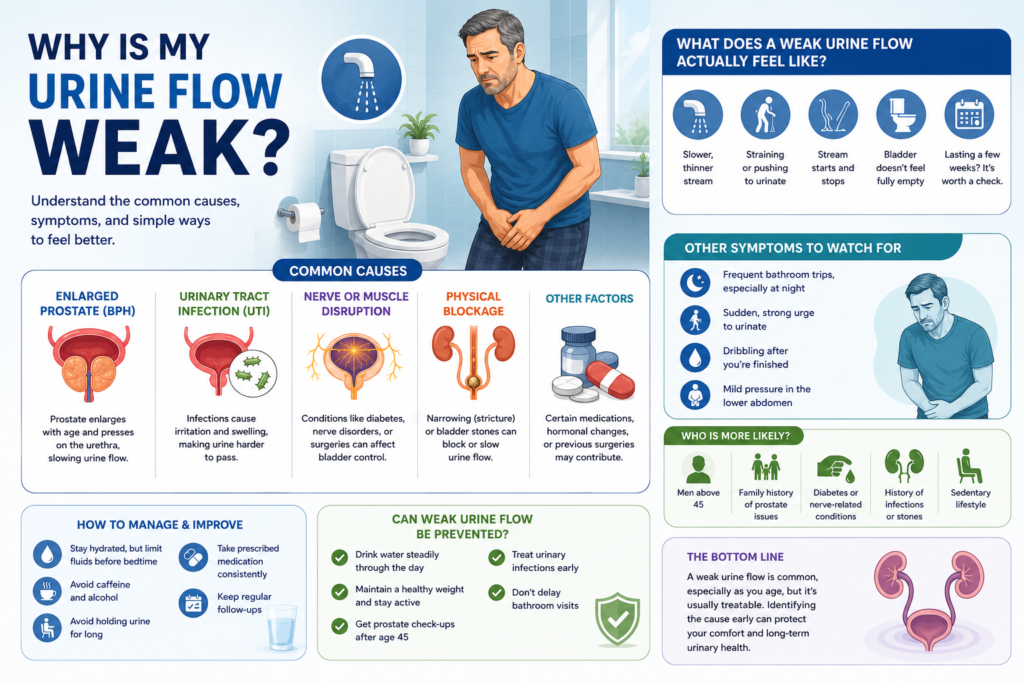
Why Is My Urine Flow Weak? Introduction Noticing your urine stream isn’t what it used to be can feel unsettling, even a little embarrassing to bring up. Maybe it takes longer to start, or the flow feels slower than before. If you’ve quietly searched for answers about this, you’re far from alone. A weak urine flow is one of the most common reasons patients visit a urologist in Ahmedabad, and in most cases, it’s both explainable and treatable. What Does a Weak Urine Flow Actually Feel Like? A healthy stream flows steadily and empties the bladder within seconds. When it weakens, you might notice: A slower, thinner stream than usual Straining or pushing to urinate A stream that starts and stops A feeling that the bladder isn’t fully empty afterward One off day isn’t a concern. But if it’s lasted a few weeks, it helps to understand why. What Causes a Weak Urine Flow? Several conditions can affect how urine passes out of the body. Could an Enlarged Prostate Be the Reason? For men past 45, this is the most common cause. The prostate surrounds the tube that carries urine out, and as it enlarges with age, a condition called BPH, it can press on that tube and slow the stream. Is a Urinary Tract Infection Involved? Infections cause swelling and irritation along the urinary tract, making urine harder to pass. This usually comes with burning or urgency too. Could Nerve or Muscle Signals Be Disrupted? The bladder relies on nerves and muscles working together. Diabetes, neurological issues, or past surgeries can disrupt this coordination and weaken the stream. Is There a Physical Blockage? A narrowing in the urinary tube, called a “stricture,” or a kidney stone, can restrict flow. It’s less common, but worth ruling out. What Other Symptoms Often Come Along With It? Weak flow rarely appears alone. Watch for: Frequent bathroom trips, especially at night A sudden, hard-to-control urge to urinate Dribbling after you think you’re finished Mild pressure in the lower abdomen Who Is More Likely to Experience This? Age above 45, particularly in men A family history of prostate issues Diabetes or nerve-related conditions A history of urinary infections or stones A sedentary lifestyle Having one of these doesn’t mean something is wrong. It simply tells you and your doctor what to watch for. How Can You Manage and Recover From This? Stay hydrated, but ease up on fluids before bedtime Avoid holding urine for long stretches Cut back on caffeine and alcohol Take prescribed medication consistently Keep follow-up visits to track progress Most patients see real improvement once the cause is identified and treated properly. Can Weak Urine Flow Be Prevented? Drink water steadily through the day Maintain a healthy weight and stay active Get prostate check-ups after age 45 Treat urinary infections early Avoid delaying bathroom visits often Final Thoughts A weak urine flow feels worrying, but it’s common and manageable. Understanding the cause takes away much of the uncertainty, and timely care makes a real difference. If this has been on your mind, reaching out to an experienced urologist in Ahmedabad like Dr. Kunal Aterkar can bring clarity, comfort, and the right treatment plan.

Urology

Why Am I Peeing So Often? 

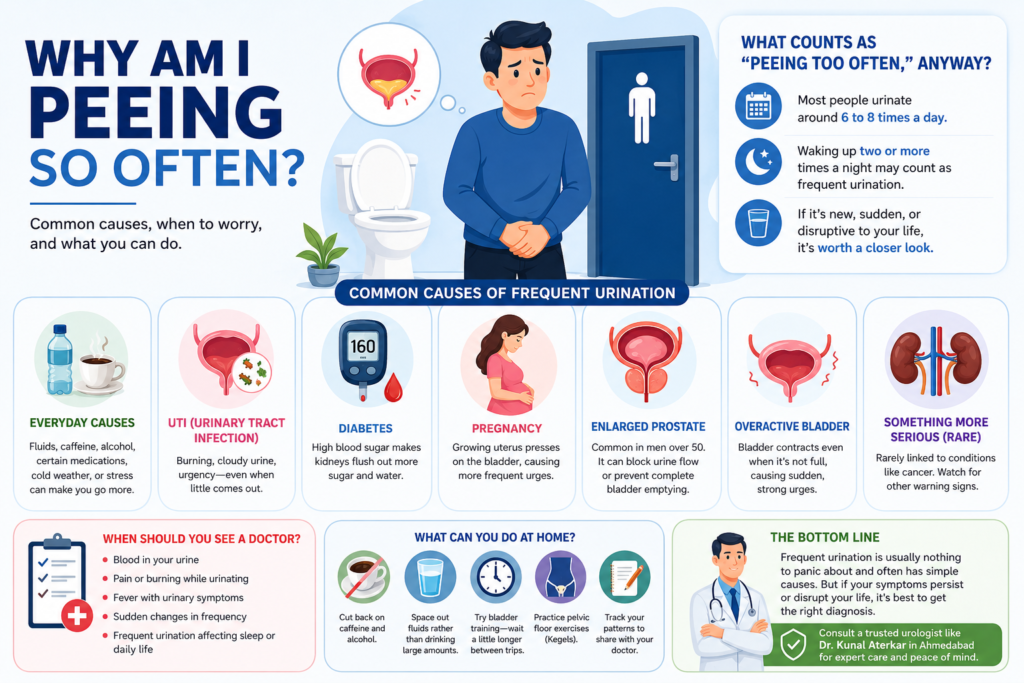
Why Am I Peeing So Often? Introduction Ever find yourself running to the bathroom every hour and wondering if that’s normal? You’re not alone. Frequent urination is something many people quietly search for answers about before ever mentioning it to a doctor. Here’s a clear, no-jargon breakdown of what might be going on. What Counts as “Peeing Too Often,” Anyway? Most people urinate around 6 to 8 times a day. Going noticeably more than that, or waking up two or more times a night, may count as frequent urination. “Normal” varies a lot depending on how much water, tea, or coffee you drink. If it’s new, sudden, or disruptive to your life, it’s worth a closer look. What Are the Most Common Everyday Causes? Drinking more fluids than usual, especially water, tea, or soda. Caffeine and alcohol, both of which make you urinate more. Certain medications, like water pills (diuretics) for blood pressure. Cold weather, which changes how your body handles fluids. Habit or anxiety, since stress can make the bladder feel more sensitive. Could It Be a Urinary Tract Infection (UTI)? A UTI happens when bacteria irritate the bladder or urinary tract. Common signs include a burning feeling, cloudy or strong-smelling urine, and urgency even when little comes out. UTIs are very common, especially in women, and usually clear up quickly with proper treatment. A urologist or general doctor can confirm it with a simple urine test. Is Diabetes Behind My Frequent Bathroom Trips? High blood sugar makes the kidneys work harder to flush out extra sugar. This pulls more water along with it, meaning more bathroom trips. Watch for these signs together: frequent urination, unusual thirst, and tiredness. A quick blood sugar test can rule this in or out. Could Pregnancy Be Making Me Pee More? Frequent urination is one of the earliest signs of pregnancy for many women. As the uterus grows, it presses on the bladder, leaving less room before you feel the urge to go. This is completely normal and can continue throughout pregnancy. What About the Prostate? In men, especially past age 50, an enlarged prostate is a leading cause. The prostate sits around the tube that carries urine out of the body. As it grows, it can squeeze that tube, making it harder to fully empty the bladder. A urologist is the specialist best equipped to diagnose and manage prostate-related urinary issues. Could an Overactive Bladder Be the Culprit? Sometimes the bladder muscle contracts even when it isn’t full, called an overactive bladder. This causes sudden, strong urges to urinate, sometimes with little warning. It isn’t dangerous, but it can disrupt daily life and sleep. Bladder training, medication, and lifestyle changes often help significantly. Is It Ever a Sign of Something More Serious? In rare cases, frequent urination can be linked to conditions like bladder, kidney, or prostate cancer. This is uncommon and usually comes with other warning signs like blood in the urine, unexplained weight loss, or persistent pelvic pain. If something concerning shows up, a urologist can run the right tests to check things thoroughly. Most causes of frequent urination are far more common and far less serious than cancer. When Should I See a Urologist or Doctor? Blood in your urine Pain or burning while urinating Fever along with urinary symptoms Sudden, unexplained changes in how often you go Frequent urination affecting your sleep or daily routine A urologist can usually get to the bottom of these symptoms with a simple urine test, blood work, or an ultrasound. What Can I Do to Manage This at Home? Cut back on caffeine and alcohol, especially in the evening. Space out fluids rather than drinking large amounts at once. Try bladder training by gradually waiting a little longer between bathroom trips. Practice pelvic floor exercises (Kegels) to strengthen bladder control muscles. Track your patterns for a few days to share with your doctor if needed. The Bottom Line Frequent urination is usually nothing to panic about. Most of the time, it comes down to something simple, like how much fluid you’re drinking, a passing infection, or age-related changes such as an enlarged prostate. That said, your body is worth listening to. If your symptoms persist, feel unusual, or start getting in the way of your day, it’s worth getting a proper answer instead of guessing. Consulting a trusted urologist in Ahmedabad, such as Dr. Kunal Aterkar, can help you get a clear diagnosis and the right treatment plan, bringing quick answers and real peace of mind.

Scroll to Top